
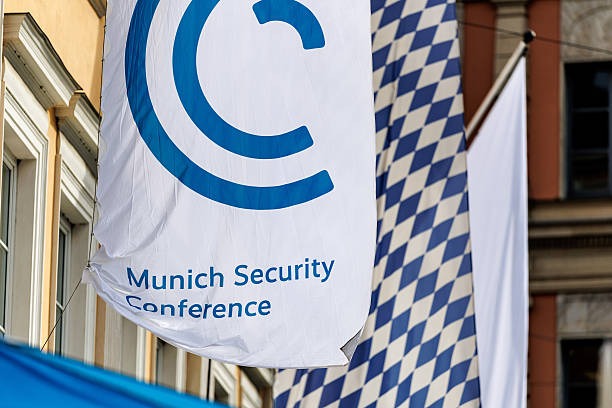
When leaders gather in Munich this February, the mood will be markedly different from the confident affirmations of Western unity that formerly defined the conference. The landscape has shifted in the wake of recent developments: contentious national elections in key member states, fresh disputes over defense budget appropriations across NATO capitals, and ongoing debates about the future of European economic policy following the implementation of new digital and trade regulations. Growing internal divisions over defense spending, diverging approaches to economic policy, evolving attitudes toward strategic autonomy, and heightened uncertainty about long-term commitments are collectively reshaping the alliance. The 2026 Munich Security Conference arrives at a moment of strategic friction inside the alliance itself. The challenge is no longer simply deterring adversaries abroad; it is preserving domestic cohesion.
The release of the Munich Security Report 2026, titled “Under Destruction,” set the atmosphere even before delegates boarded their flights to Bavaria. The paper warns that the international order isn't under pressure only from external revisionist powers but also from divisions within the West. Institutions once assumed durable — NATO, EU-U.S. cooperation frameworks, multilateral trade and security arrangements — are now subject to political turbulence and competing national visions. The report’s argument is stark: the rules-based order is being eroded not only by Moscow and Beijing, but by doubt and distrust among its architects.
That context matters profoundly, given the recent wave of American critique aimed at European allies. For instance, Washington’s dissatisfaction with European defense spending has been underscored by repeated calls for NATO members to meet or exceed the 2% GDP benchmark, while disagreements over regulatory policies, including digital markets, and differing approaches to China have sharpened bilateral tensions. What was once a familiar burden-sharing debate has evolved into something more consequential: a questioning of Europe’s reliability, as evidenced by disputes over energy diversification, economic orientation, as reflected in differing approaches to trade with China, and the overall international direction of European policy. European capitals, in turn, have bristled at what they perceive as transactional rhetoric, including threats to condition security guarantees on specific defense expenditures, and the shifting nature of U.S. commitments, exemplified by debates over continued American military presence on the continent.
Into this strained atmosphere steps the U.S. Secretary of State, Marco Rubio. His presence carries symbolic value. European leaders will look closely not only at what he says but also at how he says it. Is the United States fine-tuning its language and renewing long-term commitments? Or will Munich reinforce the perception that American strategy is shifting toward conditional engagement? The stakes are immediate and concrete: a carefully calibrated speech from Rubio could prompt headlines such as "U.S. Reaffirms Unbreakable Transatlantic Bond, Allies Rally in Munich," spurring a new phase of policy coordination and renewed defense commitments. Conversely, a misjudged tone or ambiguous language could dominate the press with stories like "Allies Alarmed by U.S. Ambiguity, NATO Uncertainty Intensifies," potentially accelerating moves toward European strategic autonomy and exposing new rifts within the alliance. Yet it is also possible that Rubio’s engagement at Munich could reinforce the alliance in ways that go beyond rhetoric, demonstrating a shared willingness to adapt collectively to new challenges. This view suggests that American participation, even under scrutiny, could still provide opportunities to solidify unity, rather than simply raise doubts among allies.
Secretary Rubio’s attendance comes at a time when the alliance must balance two strategic theatres simultaneously: the European security crisis centred on Russia and the long-term structural competition unfolding in the Indo-Pacific.
European Detachment
A subtle but important development in recent years has been what might be called European detachment— not abandonment of the alliance, but psychological distancing. Across parts of Europe, there is growing discourse about “strategic independence” and reducing overdependence on U.S. political cycles.
This detachment is motivated by multiple factors: domestic political trends in Washington, tariff disputes, disagreements over energy policy, and differing approaches to China. For some European officials, the question is no longer whether the United States remains powerful — it is whether U.S. leadership stays predictable.
Strategic independence does not necessarily mean separation. In theory, a stronger Europe could reinforce NATO by more effectively sharing burdens. However, if autonomy evolves into parallelism—separate strategic visions operating side by side—cohesion could erode.
Munich 2026 will likely reveal the extent to which this detachment is rhetorical rather than structural. Are European calls for autonomy intended to strengthen the alliance or to hedge against it?
Russia: The Immediate Test of Credibility
Russia remains the most direct military threat to European stability. Moscow’s actions over the past several years have fundamentally reshaped NATO’s posture. European governments have increased defense spending, expanded procurement, and strengthened deployments on the eastern flank. However, the true measure of these efforts will be tested within specific timeframes: for example, whether the recent spending boosts can translate into fully operational capabilities and an integrated deterrence posture by 2028. Articulating such timelines not only adds urgency but also enables decision-makers to set concrete milestones for track progress and address gaps along the way. Yet the durability of deterrence depends on unity.
If the transatlantic relationship appears politically fragile, deterrence weakens. Strategic signalling is not only about troop numbers or weapons systems — it is about confidence in collective resolve. Adversaries study rhetoric as closely as force posture. A divided alliance invites probing.
At Munich, discussions on Russia will therefore be inseparable from discussions about alliance cohesion. Can Washington and the capitals of Europe present a unified strategy that integrates sanctions, military readiness, and diplomatic coordination? Or will internal disagreements dilute collective leverage? To achieve greater unity, leaders could pursue several practical approaches: establish a regularized consultative forum among NATO and EU members to coordinate responses to Russian actions; develop joint task forces focused on intelligence sharing and crisis management; align national sanctions regimes to close enforcement gaps; and agree on minimum force posture standards for the eastern flank, ensuring credible deterrence. Enhanced diplomatic coordination and shared public messaging strategies could further reinforce a united front, making collective intentions clear to both allies and adversaries.
China and the Indo-Pacific: The Structural Challenge
While Russia dominates Europe’s immediate security horizon, China represents the systemic competitor shaping the broader geopolitical order. Beijing’s economic scale, technological ambitions, and expanding military capabilities in the Indo-Pacific have altered global power calculations.
The United States increasingly frames strategic competition with China as the defining geopolitical contest of the century. Europe, however, occupies a more nuanced position, exemplified by countries such as Germany advocating for continued economic engagement with China while simultaneously expressing concerns about human rights and strategic dependencies. This approach reflects a balance between economic interdependence and strategic caution. The question hovering over Munich is whether transatlantic partners can harmonize their approaches to Beijing. Divergent strategies risk undermining collective efforts in technology controls, investment screening, and coordinated responses to issues such as supply chain security and coercive economic practices. If disagreements persist, joint policy may become fragmented, sending mixed signals that Beijing could exploit and weakening the alliance's effectiveness in addressing challenges posed by a systemic competitor like China. Analysts will need to monitor whether these divergent stances can be reconciled into a coherent policy, or whether they portend deeper strategic divergence within the alliance.
For Washington, the Indo-Pacific is not optional; it is central. For many European states, however, the primary security theatre remains closer to home. This divergence creates tension over resource allocation, strategic prioritization, and diplomatic engagement.
Munich 2026 could serve as a forum for openly addressing these tensions. If Europe seeks greater strategic autonomy, does that autonomy align with U.S. Indo-Pacific priorities or complicate them? Can NATO maintain cohesion while the United States devotes increasing attention to Asia?
The presence of Indo-Pacific partners at the conference underscores the interconnected nature of these challenges. Security in the Baltic and in the South China Sea is no longer a separate conversation; supply chains, technology, maritime security, and energy flows link them.
The Meaning of “Under Destruction”
The Munich Security Report’s title is not hyperbole. It reflects a broader anxiety that the international system is entering a period of accelerated fragmentation. The erosion of norms, the rise of economic nationalism, technological decoupling, and the weaponization of trade and finance all contribute to systemic strain.
Yet "Under Destruction" is also a warning, not a verdict. Institutions are stressed, but not dismantled. Alliances are strained, but not severed. Munich provides an opportunity to arrest that erosion through strategic clarity. To seize this opportunity, leaders should commit to specific, actionable steps: reinvigorate regular transatlantic consultations at the ministerial level to ensure early alignment on emerging crises; establish a joint task force focused on countering hybrid threats like disinformation and interference targeting democratic institutions; advance a shared investment initiative to modernize critical defense infrastructure; and create a standing dialogue between NATO and EU representatives on economic security, supply chain resilience, and emerging technology governance. While all these measures are important, the immediate priority should be to reinvigorate ministerial-level consultations and coordinate hybrid threat responses. These steps will quickly restore strategic coherence and reinforce collective resolve amid both overt and covert pressures. Investments in defense infrastructure and long-term economic security dialogues are crucial, but building habitual, high-level alignment and countering destabilizing disinformation are essential first moves to reinforce cohesion. These diplomatic and policy measures could reinforce cohesion, signal resolve to adversaries, and restore confidence in the resilience and adaptability of the international order.
For transatlantic security, three questions will define the conference’s legacy:
First, can the United States reassure Europe that its commitments remain durable beyond political cycles? Rubio’s messaging will be critical here.
Second, can Europe demonstrate that calls for strategic autonomy strengthen NATO cohesion rather than dilute it? Increased capability must translate into coordinated action.
Third, can both sides articulate a shared framework for managing China — one that integrates economic policy, technology governance, maritime security, and defense planning?
Danger and Renewal
Moments of strain often reveal the true resilience of alliances. The transatlantic partnership has weathered disagreements before — from Iraq to trade disputes — but the current challenge is more structural. It involves not just policy differences but differing strategic horizons.
If Munich devolves into rhetorical defensiveness, adversaries will take note. But if it becomes a forum for frank alignment — acknowledging disagreements while reaffirming shared objectives — it could mark a renewal.
Russia and China both benefit from a fragmented West. They benefit from uncertainty about American resolve and from European hesitation. The Indo-Pacific competition, the European security crisis, and global economic turbulence are not separate issues; they are interconnected dimensions of a single systemic contest.
Munich 2026, therefore, carries symbolic and practical importance. It is not simply another diplomatic gathering. It is a stress test for the alliance architecture that has underpinned global stability for decades.
The order may be "under destruction," but it is not yet destroyed. Whether it endures will depend less on speeches and more on strategic coherence. In Munich, leaders have the chance to demonstrate that the transatlantic bond remains adaptive, capable, and aligned, even amid disagreement. To seize this pivotal moment, policymakers must move beyond rhetoric and commit to concrete steps: reinforce transatlantic consultation, clarify mutual defense commitments, and coordinate on shared security and economic priorities. Only through urgent and united action can the alliance withstand mounting pressures and shape a stable future.
The world will be watching not only what is said, but what is signalled.
Commentary was written by the Center for Foreign Affairs & Defense Global & International Secuirty Program
This commentary is published by the Center for Foreign Affairs & Defense Policy (CFADP), an independent, nonprofit, tax-exempt research organization dedicated to the study of international affairs, security, and defense policy. CFADP’s work is nonpartisan and nonproprietary, and the organization does not advocate for specific policy outcomes. The analyses, interpretations, and conclusions presented herein are solely those of the author(s) and do not necessarily reflect the views of CFADP, its leadership, or affiliates.
© 2026 Center for Foreign Affairs & Defense Policy. All rights reserved.
Commentary by: The Center For Foreign Affairs & Defense Policy
Published February 13, 2026
Stay Informed

COLUMBIA HEIGHTS - Post Office™
3321 GEORGIA AVE NW,
WASHINGTON, DC 20010
© 2026. All rights reserved.
Contact communications@cfadp.org
About CFADP
Research
Programs
Careers
Events
Sign up to receive expert analysis from the Center for Foreign Affairs & Defense Policy—bringing you clear insights on the world’s most pressing issues, rapid updates as events unfold, and highlights from our latest research and commentary.