Add your promotional text...

The Limits of Emergency Power in an Era of Economic Warfare
Commentary by: The Center For Foreign Affairs & Defense Policy
Published February 24, 2026
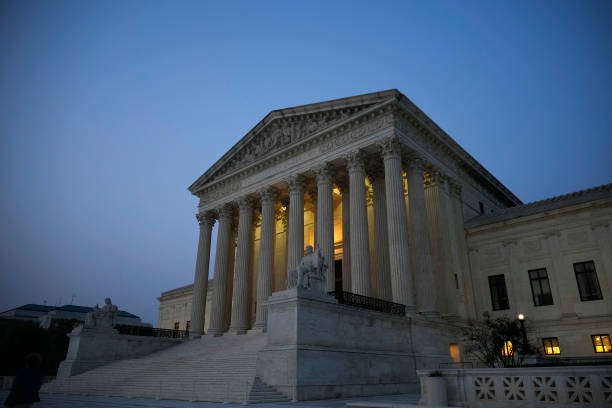
When the U.S. Supreme Court ruled on February 20, 2026, that former President Donald Trump’s sweeping global tariffs were illegal, it didn’t just invalidate a signature policy—it reshaped the underlying fault lines of American governance. In clear terms, this case redraws the map of executive versus legislative control over trade, shifting decisive economic power back to Congress. In a 6–3 decision, the Court held that the tariffs, imposed under the International Emergency Economic Powers Act (IEEPA), exceeded the president's authority and belonged to Congress, not the executive branch. This was a decisive affirmation of the separation of powers and a rebuke to decades-long assertions of broad executive economic power.
That the ruling cut across ideological lines only heightened its significance: Justices appointed by both Republican and Democratic presidents joined the majority, underscoring a moment when constitutional restraints trumped political loyalties. Conservative justices, often wary of unchecked executive power, found common cause with their liberal colleagues in defending Congress's institutional prerogatives. This alignment echoes earlier landmark cases such as Youngstown Sheet & Tube Co. v. Sawyer—when the Court blocked presidential overreach during the Korean War—and the more recent NFIB v. OSHA, both instances in which justices set aside traditional partisan divides to enforce the separation of powers. The pattern suggests a long-standing judicial impulse to protect the core architecture of American government, even when the stakes are politically charged.
But a legal victory of this scale is never the end of the story. What comes next will test the contours of U.S. trade policy, the resilience of global markets, and the political balance between the branches of government. Legally, economically, and diplomatically, the aftershocks are only beginning.
Why the Court Struck Down the Tariffs
At the heart of the decision was statutory interpretation. IEEPA, a Cold War–era law that grants presidents limited authority to act in sudden economic emergencies, does not explicitly give a president the power to levy tariffs, which are, at their core, a form of taxation and revenue generation. By striking down the tariffs on this basis, the Court reaffirmed a basic constitutional principle: Congress, not the president, holds the power to tax and regulate international commerce.
The majority leaned heavily on what legal scholars call the major questions doctrine — a principle that courts should require clear and explicit congressional authorization before allowing the executive branch to exercise power with vast economic or political implications. While that doctrine has been controversial in other contexts, in this case it served as a central pillar for constraining broad executive action without clear legislative backing.
The Immediate Fallout: Policy Upended and Markets Watching
In practical terms, the ruling means that billions in tariffs — imposed on imports from across the globe — have been rendered legally invalid. The U.S. Customs and Border Protection has stopped collecting them, and attention now turns to a likely wave of litigation over refunds for the estimated $175 billion in tariffs already collected.
Financial markets didn’t crash in the wake of the decision, but investors reacted cautiously. Wall Street analysts noted that while the ruling removes legal uncertainty about the basis of the tariffs, it does not immediately eliminate tariff rates — because the administration has already begun imposing similar levies under a different statute.
Consumer prices, which had risen under the tariff regime by putting upward pressure on import costs, are unlikely to drop sharply now despite the ruling, according to major financial firms. That’s partly because many companies won’t immediately reduce prices and partly because the administration is keeping tariffs in place under alternative legal authority.
Political and Legal Reverberations
The political blowback was swift. Former President Trump publicly condemned the Court’s decision as a “disgrace” and vowed to pursue new tariff authority without waiting for Congressional approval. This rhetoric, while resonating with his base, further underscores the fracturing of the debate over executive power and trade policy.
At the same time, lawmakers in Congress, who were largely sidelined as this tariff policy unfolded, suddenly find themselves thrust back into the driver’s seat. If tariffs are to remain a durable feature of U.S. policy, explicit legislative authorization will be required. In the wake of the ruling, Congress could move quickly to hold hearings to review the administration’s trade strategy and its impact on domestic industries. Lawmakers might consider drafting new trade legislation to clarify executive authority or to establish stronger guardrails around the use of tariffs in the future. Alternatively, Congress could pursue bipartisan efforts to reclaim or redefine its constitutional role in trade, including establishing special committees or proposing new reporting requirements for executive actions. Whether Congress embraces that role or chooses to concede authority and political liability over trade to the White House remains an open question.
International partners are also responding. The European Union has called on the United States to honour existing trade agreements and warned that unpredictable tariff policy threatens broader economic cooperation. That diplomatic pressure highlights another consequence of the ruling: it isn’t just domestic policy at stake — global economic relations are in flux.
Looking Ahead: Options After the Ruling
Despite the setback, the Trump administration is not abandoning its tariff policy. Officials have already announced new tariffs under the Trade Act of 1974, raising them from 10% to 15%, indicating a strategic pivot rather than a retreat. Here, the legal pivot hinges on the statutes' requirements: IEEPA requires a national emergency, while the Trade Act of 1974 requires formal findings of injury to domestic industries. But these measures are temporary, with some set to expire in 150 days without Congressional approval, and they may invite fresh legal challenges.
This suggests a judicial and political tug-of-war lies ahead:
Will taxpayers foot the bill for billions in refunds before the 2028 election, or will legal and political gridlock leave importers waiting for relief? Congress may face pressure to clarify or expand trade authority if it wants tariffs to persist without future constitutional challenges.
International partners may seek to renegotiate or reassess trade commitments in light of the legal uncertainty.
The Supreme Court’s decision did not abolish tariff policy. What it did was remind the nation—and the world—that constitutional boundaries matter, even in urgent economic policy. If the next chapter of U.S. trade history teaches anything, it is that political will and legal precision must go hand in hand if tariff strategy is to survive both judicial scrutiny and global economic realities.
Stay Informed

COLUMBIA HEIGHTS - Post Office™
3321 GEORGIA AVE NW,
WASHINGTON, DC 20010
© 2026. All rights reserved.
Contact communications@cfadp.org
About CFADP
Research
Programs
Careers
Events
Sign up to receive expert analysis from the Center for Foreign Affairs & Defense Policy—bringing you clear insights on the world’s most pressing issues, rapid updates as events unfold, and highlights from our latest research and commentary.