Add your promotional text...

After the Operation: Venezuela at the Crossroads Post-Maduro
Commentary by Junaid Ahmad
Published January 13, 2026
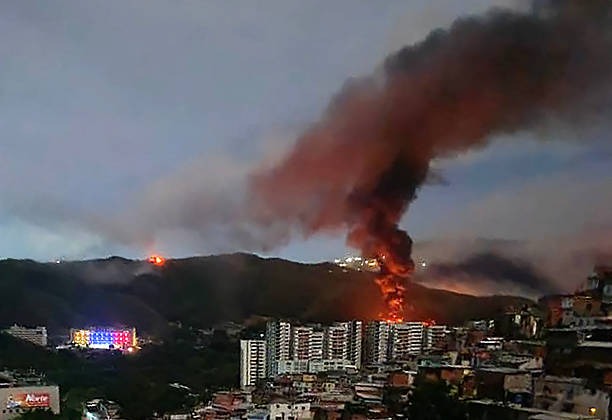
The capture of Venezuelan President Nicolás Maduro by U.S. forces on January 3, 2026, marked the abrupt end of one of the Western Hemisphere's most entrenched authoritarian regimes. The operation itself, long rumoured, quietly prepared, and carried out flawlessly, has already entered the canon of modern U.S. coercive statecraft. The legal basis for this intervention was rooted in international legal doctrines that stress the protection of human rights. At the same time, morally, it was portrayed as a necessary action to alleviate the suffering of the Venezuelan people. Regionally, the move was supported by neighbouring countries seeking stability. However, the intervention raises critical questions about sovereignty and the possible establishment of a complex precedent. By intervening in Venezuela, U.S. forces have potentially set a new standard for international engagement that other nations could interpret as validation for similar actions elsewhere. While supporters argue that such interventions are warranted in the face of human rights violations, critics express concern over the erosion of national sovereignty and the risk of abuse by powerful states pursuing geopolitical interests. Thus, while the operation removed a single figure, it did not automatically resolve the more profound crisis gripping Venezuela. The central question now is whether the post-Maduro period becomes a democratic reset or merely another pause in a prolonged cycle of instability.
In the immediate aftermath, Venezuela faces a familiar but intensified challenge: a power vacuum layered atop hollowed-out institutions. Maduro's removal dismantles the regime's apex, but it does not erase the networks of patronage, corruption, and coercion that sustained it. Elements of the security services, state oil structures, and political machinery remain intact and potentially resistant. The risk is not sudden anarchy, but fragmentation: rival claimants to authority, competing security commands, and localized strongmen seizing power under the guise of 'order.' To visualize these conditions, it is essential to identify the key players: 1. Security Factions: Comprising loyalists within the military and police forces who might resist or manipulate changes. 2. Oil Industry Networks: Influential executives and workers in state-run PDVSA who have a vested interest in maintaining the status quo. 3. Political Party Factions: Elements of the ruling party that can either obstruct or facilitate reforms depending on their perceived gains or losses.
To manage these challenges and mitigate potential resistance, it is imperative to employ a series of strategies:
Establish a National Reconciliation Commission:
A National Reconciliation Commission should function as a structured, credible forum for dialogue rather than a symbolic body. Its composition must reflect political pluralism, including government and opposition parties, civil society, labour groups, business leaders, religious institutions, and regional representatives. The commission’s mandate should include mediating political disputes, addressing grievances stemming from repression or exclusion, and proposing confidence-building measures such as amnesty frameworks, truth-seeking mechanisms, or electoral guarantees. Clear timelines, public reporting, and legally recognized authority are essential to prevent paralysis or capture by any single faction.
Integrate International Observers
International observers can play a stabilizing role by lending credibility to sensitive transitional processes such as elections, constitutional reforms, or demobilization efforts. Their presence reassures skeptical actors that commitments will be monitored and that violations will be documented. Observers should be invited under clearly defined terms of reference that preserve national sovereignty while enabling transparency. Regular public assessments, rather than closed-door reporting, help deter misconduct and signal seriousness to domestic audiences and international partners alike.
Encourage Professionalization of Security Services:
Reforming the military and police is central to preventing relapse into factional conflict. Professionalization initiatives should emphasize institutional loyalty to the constitution rather than individuals or parties. This can include revised training curricula, depoliticized promotion systems, and incentives tied to professionalism and human rights compliance. International training partnerships and oversight mechanisms can help reinforce norms while offering security leaders a stake in long-term national stability rather than short-term political survival.
Economic Inclusivity Initiatives:
Reforming the military and police is central to preventing relapse into factional conflict. Professionalization initiatives should emphasize institutional loyalty to the constitution rather than individuals or parties. This can include revised training curricula, depoliticized promotion systems, and incentives tied to professionalism and human rights compliance. International training partnerships and oversight mechanisms can help reinforce norms while offering security leaders a stake in long-term national stability rather than short-term political survival.
Political Reforms:
Durable transition requires institutional frameworks that lower the stakes of political competition. Electoral reforms, decentralization measures, and safeguards for minority parties can reduce zero-sum dynamics that fuel factionalism. Legal guarantees for opposition participation, independent electoral authorities, and judicial reforms are critical to restoring confidence. Over time, these measures help normalize political competition, making peaceful transitions routine rather than existential battles for power.
This places extraordinary pressure on the Venezuelan opposition, which now confronts its defining test. Years of repression fractured opposition leadership and undermined public confidence. Post-Maduro, unity is no longer optional—it is existential. An interim authority must emerge quickly, with three non-negotiables: civilian control of the armed forces, a transparent, time-bound electoral roadmap, and immediate humanitarian stabilization. Any perception of infighting or foreign overreach will create openings for regime remnants and criminal organizations to reassert themselves.
Economically, expectations must be managed as carefully as hope. The fall of Maduro does not mean the instant revival of Venezuela’s economy or oil sector. Infrastructure decay, sanctions compliance, and institutional rot will take years to unwind. The priority should be stabilization over transformation: restoring basic services, safeguarding oil revenues by transparent escrow mechanisms, and sequencing sanctions relief to verifiable reforms. To effectively implement this, a phased approach linking each sanction relief with distinct reform milestones could be more persuasive. For instance, the initial phase could involve restoring basic services and pairing it with reforms such as implementing central-bank reporting standards. As each reform milestone is accomplished, additional sanctions relief can be provided, ensuring a transparent and accountable recovery process. A coalition of international organizations, local government entities, and civil society groups could monitor this phased approach. They would be responsible for verifying each milestone and ensuring that reform commitments are met. A rushed economic opening without safeguards risks recreating the same extractive dynamics that drove collapse.
Justice will be the most politically sensitive terrain. Maduro’s capture sends a powerful signal that impunity is not guaranteed—but a sweeping purge would likely paralyze governance and deepen polarization. Venezuela will need a calibrated accountability framework: prosecutions for the most serious crimes, conditional amnesties tied to cooperation, and an internationally supported truth process. The objective is legitimacy, not revenge.
For the United States, the operation’s success now gives way to a more delicate responsibility: restraint. The temptation to micromanage Venezuela’s transition would be strategically self-defeating. A Venezuelan-led process, supported—but not dictated—by international partners, is the only path geared toward sustainable legitimacy. Washington’s leverage should be exercised quietly through conditional assistance, diplomatic coordination, and regional consensus.
Ultimately, Venezuela’s future will be decided not in Washington or Miami, but in Caracas and the country’s provinces—by civil society, local leaders, and citizens who endured the regime’s failures firsthand. Maduro’s removal closes a long, bleak chapter. Whether the next chapter becomes one of renewal or renewed turmoil depends on whether Venezuela can convert a dramatic operation into durable political change.
Stay Informed

COLUMBIA HEIGHTS - Post Office™
3321 GEORGIA AVE NW,
WASHINGTON, DC 20010
© 2026. All rights reserved.
Contact communications@cfadp.org
About CFADP
Research
Programs
Careers
Events
Sign up to receive expert analysis from the Center for Foreign Affairs & Defense Policy—bringing you clear insights on the world’s most pressing issues, rapid updates as events unfold, and highlights from our latest research and commentary.